If you’re thinking about moving to South Korea—or you’ve just arrived and are wondering where to begin—welcome. I remember how quickly the excitement of arriving can turn into, “Wait… how does this work?”
After years of living and working here, many of the things that once felt confusing now feel completely normal. This first part covers the practical foundations that make everything else easier: your resident ID, phone, maps, banking, housing and transportation.
1. Your Foreign Resident Card Becomes Surprisingly Important
At first, your foreign resident card can feel like just another immigration document. Then you start living your everyday life in Korea and realize just how often you need it.
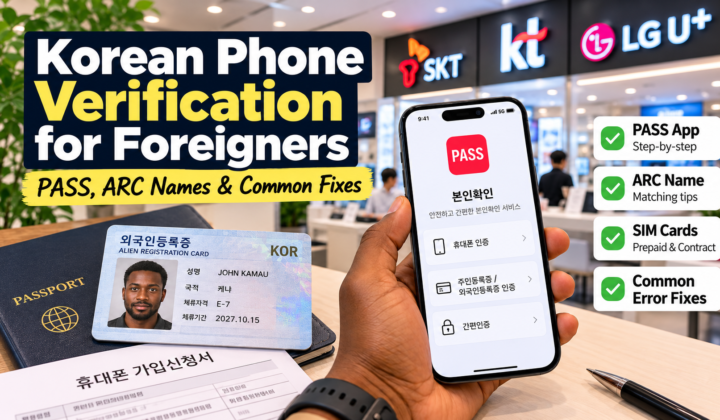
It can come into play when opening a bank account, getting a mobile plan, verifying your identity online and setting up other services. One small lesson worth remembering: try to keep the spelling and order of your name consistent everywhere.
2. Get a Korean Phone Number Earlier Than You Think You Need One
A Korean phone number is one of those things that doesn’t sound particularly important until you start trying to do things online.
Your number is often connected to identity verification, so you’ll use it for banking, shopping, deliveries, subscriptions and local apps. A tourist SIM is fine when you’ve just landed, but long-term residents will usually find life much easier with a number registered in their own name.
3. Download Naver Map or KakaoMap—You’ll Thank Yourself Later
If you’re used to opening Google Maps everywhere you travel, Korea may require a small change of habit. Naver Map and KakaoMap are incredibly useful for buses, subways, walking directions, local businesses and Korean addresses.
Explore the English settings, save your home and workplace, and give yourself a little time to get familiar with the interface. Before long, checking the next bus or finding a new café becomes second nature.
4. Don’t Be Discouraged If Banking Feels Complicated at First
Banking is one area where two foreigners can visit two different branches and come away with very different stories. The process can depend on the bank, branch, residence status and documents you have with you.
Don’t let one confusing visit make you think banking in Korea will always be difficult. Bring your passport, foreign resident card if available, Korean phone number and relevant employment or residence documents. Once everything is connected properly, everyday banking becomes much more convenient.
5. Wolse and Jeonse Sound Confusing Until You See How They Work
Korea’s rental system was one of those things I had to learn because it doesn’t necessarily work the way housing works back home. With wolse, you normally pay a deposit and monthly rent. Jeonse traditionally involves a much larger deposit with little or no monthly rent.
Don’t compare homes based on monthly rent alone. Look at the deposit, management fees, utilities, location, transportation and contract terms together. Take your time and ask questions before signing anything.
6. That ₩500,000 Apartment May Cost More Than ₩500,000
This catches plenty of newcomers. You find an apartment with rent that fits your budget, only to discover there’s another monthly charge called gwanribi (관리비), or a management fee.
Depending on the building, it might cover shared-area maintenance, elevators, cleaning, security, internet or water. Before signing, ask exactly what’s included and what the previous tenant typically paid each month.
7. Korea’s Public Transportation Is One of the Things You’ll Probably Grow to Love
One of my favorite things about living in Korea is how easy it can be to get around without a car. Buses, subways, high-speed trains and intercity buses connect an enormous amount of the country.
Get a rechargeable transportation card such as T-money and learn how transfers work. Once the basics become familiar, even travelling somewhere new can feel surprisingly manageable.
Ready for the Everyday-Life Side of Korea?
Once these foundations are in place, the next stage is less about paperwork and more about settling in: learning enough Korean to feel comfortable, understanding work culture, using delivery services, navigating healthcare, recycling and finding the part of Korea that suits you.
Continue with Part 2: Settling Into Everyday Life in South Korea →