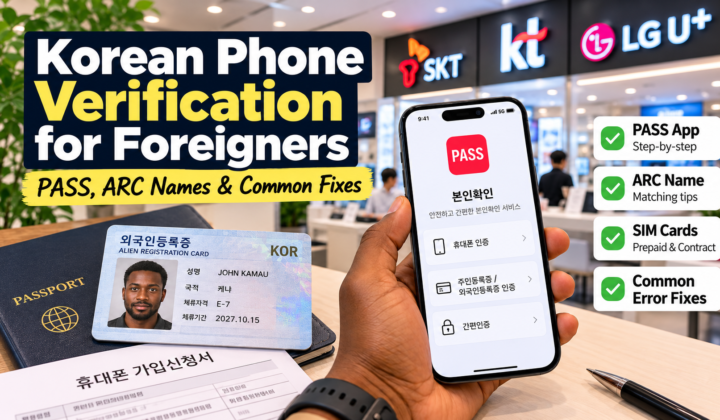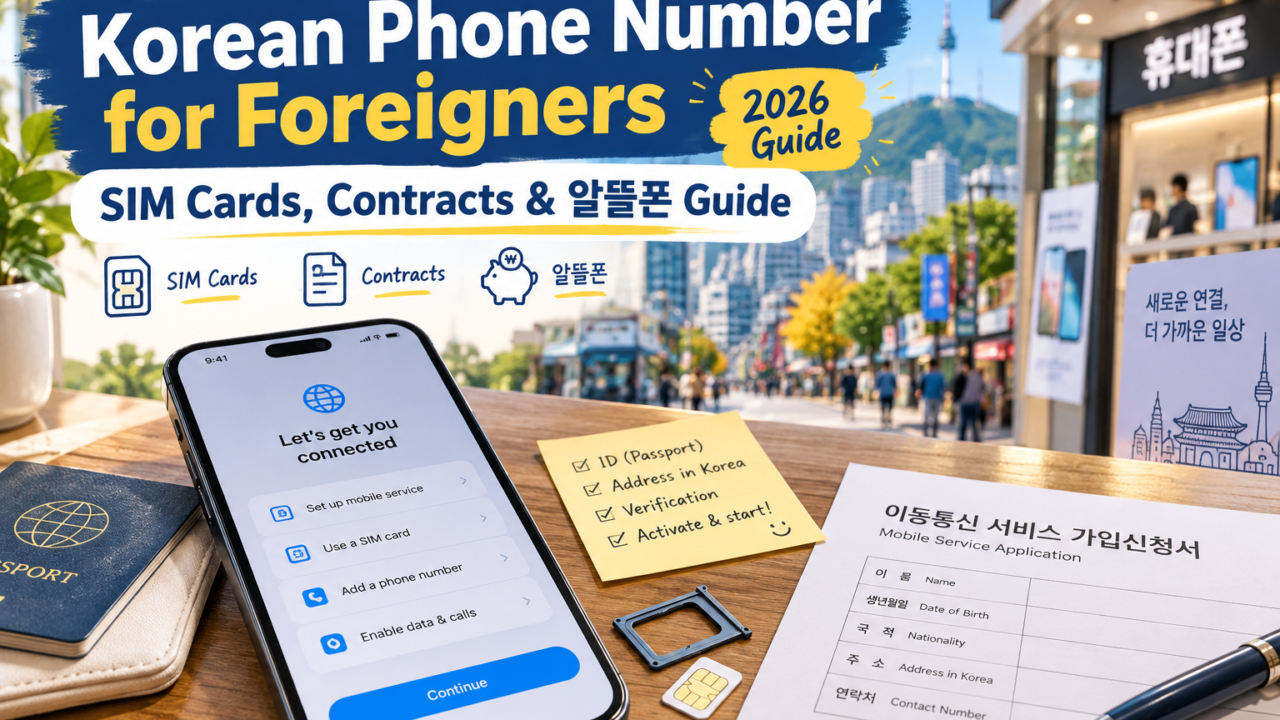
For foreigners living in Korea, getting a Korean phone number is one of the first practical setup steps that starts affecting almost everything else.
It sounds like one of those boring things you deal with after arriving in Korea.
Buy a SIM card. Put it in your phone. Finished.
Unfortunately, Korea has other plans for you.
Once you actually start living here, you quickly discover that your Korean phone number is connected to practically everything: banking, online shopping, government websites, hospital reservations, delivery apps and account verification.
At some point, your phone number stops being just a phone number and starts feeling suspiciously similar to a second ID card.
I’ve been living in Korea for many years now, and I’ve gone through several phone contracts, starting with SK Telecom and later moving to KT. Here is what I wish someone had explained to me when I first arrived.
My First Korean Phone Contract
When I first came to Korea, I signed up for a postpaid plan with SK Telecom (SK텔레콤 — eseukei tellekom).
Luckily, I already had my Residence Card. There was just one small problem.
My Korean at the time was approximately somewhere between “hello” and “please save me.”
So I brought a Korean-speaking friend with me. That turned out to be one of the smartest things I could have done.
Signing the contract itself wasn’t particularly difficult. The difficult part was understanding exactly what I was agreeing to, because Korean mobile contracts can have quite a few moving pieces.
The Price You’re Told Isn’t Always the Price You Pay
This is probably the biggest lesson I learned.
You walk into the store. They explain the phone. They explain the plan. Someone punches numbers into a calculator. You hear a monthly amount and think, “Okay. That’s not too bad.”
Then your first proper bill arrives.
And suddenly you’re staring at your phone wondering whether you accidentally financed a small car.
In my experience, the difference usually came from the device installment payments and VAT calculations.
So don’t only ask, “How much is the plan?” Ask: “Approximately how much will leave my bank account every month, including the phone?”
That is the number you actually care about.
Understand the 2–3 Year Contract Before Signing
If you’re planning to stay in Korea for several years and want a flagship Samsung Galaxy or iPhone without paying the entire device price upfront, spreading the cost across monthly payments can be convenient.
This is basically the route I’ve taken for years.
Why?
Because I have a terrible habit.
I like the latest phones.
Do I always need the latest phone? Probably not.
Has that stopped me? Also probably not.
If you’re a student or trying to keep monthly costs low, though, an expensive phone combined with a large data plan can become a surprisingly heavy monthly expense.
Do You Really Need SKT, KT or LG U+?
Korea’s three major mobile networks are SK Telecom, KT and LG U+.
I originally used SK Telecom before eventually switching to KT (케이티 — ke-i-ti), which I’ve continued using.
For everyday life inside major cities, I personally haven’t found the carrier choice to be something worth losing sleep over. Where I pay more attention is when travelling or spending time farther outside major urban areas, where I prefer staying with one of the large carriers for peace of mind.
Meet 알뜰폰: The Budget Option
알뜰폰 (al-tteul-pon) is the term commonly used for Korea’s budget mobile providers, or MVNOs.
If you’re trying to save money, this is where things become interesting.
Instead of buying a new phone through a major carrier, you can keep the phone you already own and use an 알뜰폰 SIM plan.
For many light or moderate users, plans around ₩10,000–₩20,000 per month are possible. Just check whether the advertised price is promotional and what the normal price becomes later.
Yes, I know. Nobody enjoys reading telecom small print.
Unfortunately, your bank account does.
Should You Buy a Phone or Get One on Contract?
This really comes down to your personality and your budget.
If you’re like me and immediately start looking at the newest Galaxy or iPhone every time one is released, a major-carrier contract can make sense because you get the phone you want without paying for the entire device upfront.
If you’re more financially sensible than I am, keeping the phone you already have and combining it with an 알뜰폰 plan can save a lot of money over several years.
Your phone doesn’t suddenly stop working because Samsung released another one.
I remind myself of this regularly.
It has not yet worked.
Don’t Panic About Having Less Mobile Data
Korea is one of the easier places to live without an enormous mobile-data allowance. Wi-Fi is widely available in cafés, restaurants, universities, hotels, shopping centres and many public facilities.
You don’t automatically need a huge data plan just because one exists. Look at how much mobile data you actually use before paying for more.
Tourist? Keep It Simple
If you’re visiting Korea as a tourist, a prepaid SIM or eSIM is normally enough for internet access, navigation and communication during your trip.
The situation changes when you’re planning to actually live here.
If you’re staying long term, I recommend getting your Residence Card first and then setting up your main Korean mobile account properly in your own name. If you’re still waiting for yours, start with my Foreign Resident Card guide.
Make Sure Your Name Matches Your Residence Card
This deserves its own warning because it causes endless headaches for foreigners.
When your Korean phone number is registered, make sure your name is entered consistently with your Residence Card. Name order, spacing and even capitalisation can cause problems on some services.
If the telecom registration and the identity information another service expects don’t match, you may eventually meet the dreaded “Identity verification failed” message.
I explain exactly how I troubleshoot this in my companion guide: Why Korean Phone Verification Fails for Foreigners.
Bring a Korean-Speaking Friend If Necessary
When I originally opened my account, I couldn’t speak Korean well, so a friend helped me.
Even now, although I can speak and understand Korean fluently, my Korean wife often comes with me when I’m dealing with a new phone contract.
Not because I can’t communicate. Because telecom contracts can contain enough conditions, discounts and payment details that having another pair of ears doesn’t hurt.
If your Korean isn’t strong, bring someone who can explain everything to you. If you can find an English-speaking branch, even better.
What About Phone Insurance?
If you’re buying an expensive flagship phone, at least look at the insurance options.
I recently needed to repair my phone. Without insurance, the repair would have cost me a fortune.
Insurance isn’t necessary for everyone, but when you’re carrying a device worth well over ₩1 million, don’t dismiss it automatically.
So What Would I Choose Today?
If you’re staying in Korea temporarily, keep things simple: use a prepaid SIM or eSIM.
If you’re living here long term and want the latest high-end phone without paying for it upfront, look at the major carriers — but understand the full monthly cost and contract conditions before signing.
If you’re living here long term and trying to save money, I’d seriously consider keeping or buying your own phone and using an 알뜰폰 (al-tteul-pon) plan.
Whatever route you choose, make sure the account is registered correctly under your Residence Card name.
Because once you start living properly in Korea, you’re going to need that phone number for far more than making phone calls.
And if you’re setting up the rest of your life here, the next useful reads are my guides to opening a Korean bank account and the essential apps for living in Korea.
Frequently Asked Questions About Korean Phone Plans for Foreigners
Can a foreigner get a Korean phone number without a Residence Card?
Yes. Tourists and new arrivals can usually use prepaid SIMs or eSIMs with a passport. For long-term residents, a phone line registered under your Residence Card is much more useful because it can support Korean identity verification.
What is the cheapest Korean phone plan for foreigners?
For many long-term residents, 알뜰폰 (al-tteul-pon) or MVNO plans are among the cheapest options. Promotional plans can fall around the ₩10,000–₩20,000 range, but always check the normal price after the promotion ends.
Do I need SK Telecom, KT or LG U+?
Not necessarily. The major carriers are convenient if you want device financing, in-store support or a premium plan. Budget MVNOs use the major networks and can be much cheaper if you already own your phone.
Why does my Korean phone number matter for banking and apps?
Many Korean services use 본인인증 (bon-in-in-jeung), or identity verification. That means the name and identity attached to your mobile account may need to match your Residence Card details.
For current official guidance, Korea’s Easy Law service distinguishes between prepaid, postpaid and MVNO plans and notes that required documents can vary by carrier.